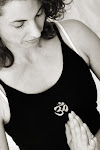
Are you aware of you energy yet? Can you feel the prana or chi (or whatever you call it)? Here are two really easy ways to begin to sense it. One you can do while you are sitting here reading this blog entry (although, admittedly, if your workmates can see you they may wonder…)
Put your arms straight out in front of you, chest-height. Turn one palm up and one palm down. Quickly open and close your fists twenty times. Then turn your palms in the opposite direction and repeat opening and closing your palms twenty times. When you finish, you may already feel the *activity* in the palms of your hands. It feels a bit like feathers are touching your hands. That is your energy. To enhance the feel of the energy, bring your elbows to your side with your hands out in front still. Relax your hands so your fingers curl gently (like you are holding a ball). Turn them to face each other and gently move them together (without touching) and further apart. This exercise from Chi Kung is called “Holding an Energy Ball” and it is precisely what you are doing. You will feel the energy between your hands. Pay attention to your hands now. Do you feel even more activity on the surface of your palms? You may even feel many swirls. You have awakened Chakras in your palms. Chakras are intersections of energy channels.
Monday, May 21, 2007
Thursday, May 03, 2007
Doing Yoga with the Kids


Yep! I really do yoga with my kids climbing on me – literally. Here are the photos to prove it.
I also want to add that my husband told me Zack (3 years) did his own yoga practice tonight while his sister took a bath. (I was out teaching yoga). He said, “Daddy, can I do yoga?” Then he got out is mat and proceeded to do about 5 minutes of his own yoga (many variations of down dog.) That’s my yoga boy! ☺


Reversing the Cycle of the Breath
Here is a wonderful exercise for letting go. In our culture, we view the cycle of the breath as beginning with an inhalation and ending with an exhalation. There are cultures in which they view it going the other way, beginning with an exhalation and ending with an inhalation. When I need to let go, I use this image of the breath. I first exhale, releasing whatever I am holding on to, creating space in my body, mind, and heart from something new. And then I inhale and bring in wonderful new energy to fill those spaces.
Use this idea in your breathing exercises or during Savasana. I find it particularly helpful when I am feeling stressed and in need of a deep surrender.
Use this idea in your breathing exercises or during Savasana. I find it particularly helpful when I am feeling stressed and in need of a deep surrender.
Staying Motivated to Practice
How do I stay motivated with my practice? Doing my practice leaves me feeling wonderful! Calm, relaxed, peaceful, kind, loving feelings I crave. If I stray too far from my practice, I begin to feel fears and negativity creep back into my life. I see myself becoming irritable with my children, less grounded and centered. I also find it feeds other negative habits, such as choosing foods that aren’t good for my system, reading books that don’t serve me, watching television. Whereas when I am doing my practice, it feeds wonderful habits, like doing more of my practice!
Friday, April 20, 2007
Detaching from Practice Expectations
In my last entry, I described my practice and the fact that I do something up to four times every day. How do I do it? Frankly, because I don’t have high expectations. It took my years to let go of my high practice expectations. Before kids, I had time for a leisurely practice with a lot of asanas (and time to work into the challenging ones) and hours of quiet for Pranayama and meditation. My life is very different now. Once I had my daughter, I kept waiting to “get back” to my practice. I defined practice as the hours of quiet and uninterrupted focus, quiet and focus that were no longer a part of my life. I put off any type of practice because I felt I needed the “old version” to “count”.
I had to let go of my original expectations and reevaluate what a practice was to me. How did I define it if it wasn’t about time? I realized my practice was about what I was doing to help myself spiritually and vibrationally. I wanted it to lift me up and help me live from a better place. I realized that not doing anything was robbing me of that experience.
As I mentioned in the first paragraph, I don’t have high expectations. You may have giggled at that statement, as if four practices each day aren’t high expectations. What I mean is I don’t expect perfection in any of my practices. I am okay with not doing some of my practices during the day (and occasionally an entire day goes by with nothing). I don’t expect to fit in all four. I can flow with our family life, with what is happening. In fact, that is one reason I have so many practices, I have options. If we are busy one morning, I can easily skip the meditation because I know I will do something before bed.
I also have low expectations for each practice. I often get my mat out and do a Tadasana and then find myself needed elsewhere, never getting back to my mat. I let myself be grateful for that Tadasana, not the 15 other poses I didn’t get to. If I am interrupted by my children during my meditation, I use the time as an opportunity to practice love and compassion, the point of meditation, not as a source of irritation because my meditation wasn’t perfect. Anything you do, one conscious breath a day, is taking you closer to calm and peace.
I frequently speak to my students about the importance of just doing something, even if it is a single pose. One pose can be considered a practice. Really. It all depends on your attitude around it. Remember why you are doing a practice. Whatever your reasons, I doubt you could argue that even one pose is a waste of time. Once you let go of your expectations, you would be amazed at what opens up for you.
I had to let go of my original expectations and reevaluate what a practice was to me. How did I define it if it wasn’t about time? I realized my practice was about what I was doing to help myself spiritually and vibrationally. I wanted it to lift me up and help me live from a better place. I realized that not doing anything was robbing me of that experience.
As I mentioned in the first paragraph, I don’t have high expectations. You may have giggled at that statement, as if four practices each day aren’t high expectations. What I mean is I don’t expect perfection in any of my practices. I am okay with not doing some of my practices during the day (and occasionally an entire day goes by with nothing). I don’t expect to fit in all four. I can flow with our family life, with what is happening. In fact, that is one reason I have so many practices, I have options. If we are busy one morning, I can easily skip the meditation because I know I will do something before bed.
I also have low expectations for each practice. I often get my mat out and do a Tadasana and then find myself needed elsewhere, never getting back to my mat. I let myself be grateful for that Tadasana, not the 15 other poses I didn’t get to. If I am interrupted by my children during my meditation, I use the time as an opportunity to practice love and compassion, the point of meditation, not as a source of irritation because my meditation wasn’t perfect. Anything you do, one conscious breath a day, is taking you closer to calm and peace.
I frequently speak to my students about the importance of just doing something, even if it is a single pose. One pose can be considered a practice. Really. It all depends on your attitude around it. Remember why you are doing a practice. Whatever your reasons, I doubt you could argue that even one pose is a waste of time. Once you let go of your expectations, you would be amazed at what opens up for you.
Friday, March 23, 2007
My Personal Yoga Practice
My practice changes quite regularly. I would say every six weeks or so, my practice takes on a new look. Right now, on a good day, I do four practices each day. One of the reasons I have so many practice times is it gives me flexibility to go with what is going on in my day. So on most days I only get to 2 or 3 of them.
I start the day with a twenty-minute meditation. I use the term “start” loosely since I don’t do it first thing when I wake up. My children need me in the morning for attention, breakfast, dressing, etc. I normally can escape at some point for twenty-minutes before lunch. And, yes, I usually am interrupted during my time. My son (he is 3 years old) needs to check in with me at least two times during my period (especially when my husband is gone already). They know the time is important to me and respect the quiet very well for young children. I choose to see the interruptions as very sweet (especially because he usually comes in to say, “I love you”), knowing that one day soon I won’t have interruptions and will miss them! This period is my most important practice of the day. I fit this in 6-7 days each week. It sets the tone for the day.
My asana practice happens in the afternoon. If I am teaching a class, I don’t do a practice that day or only do a couple of poses. If I am not teaching, I do around 60 minutes of whatever I am working right now. Of course, “60 minutes” is also loosely used. I do my practice in the kitchen with my children doing crafts or eating right there. We chat and I am regularly interrupted by them to help with something. Although my mat is out for an hour, I do probably 40 minutes of yoga. I always put my mat away after an hour. I want my kids to know that my practice time is only that long – that they can count on it – and I don’t want to feel the pull of the mat being out looking at me when it is time to move on and be with them again. I do not attempt Savasana at this time. I do my asana practice 5-6 days each week.
My last two practices occur at the same time – in the evening, after my children are asleep and right before I go to bed, I do a 20-minute Pranayama session, my Savasana, and a 20-minute meditation. This time is also frequently interrupted by children waking and needing something from me. While the morning meditation sets the tone for the day, this session helps me surrender the day and sets the tone for my sleeping. I sleep more soundly and have better dreams when I have fit this time in. I do the meditation aspect 6-7 nights each week and the Pranayama 5-6 nights each week.
Out of all these practices, the morning meditation is my most sacred time. I rarely miss it, even if it hits in the middle of the afternoon, I work to fit it in. Stay tuned for my next entry when I discuss how I finally found time for four practices with children (one of whom I homeschool) and a business to run. (And, no, it isn’t magic! ☺ )
I start the day with a twenty-minute meditation. I use the term “start” loosely since I don’t do it first thing when I wake up. My children need me in the morning for attention, breakfast, dressing, etc. I normally can escape at some point for twenty-minutes before lunch. And, yes, I usually am interrupted during my time. My son (he is 3 years old) needs to check in with me at least two times during my period (especially when my husband is gone already). They know the time is important to me and respect the quiet very well for young children. I choose to see the interruptions as very sweet (especially because he usually comes in to say, “I love you”), knowing that one day soon I won’t have interruptions and will miss them! This period is my most important practice of the day. I fit this in 6-7 days each week. It sets the tone for the day.
My asana practice happens in the afternoon. If I am teaching a class, I don’t do a practice that day or only do a couple of poses. If I am not teaching, I do around 60 minutes of whatever I am working right now. Of course, “60 minutes” is also loosely used. I do my practice in the kitchen with my children doing crafts or eating right there. We chat and I am regularly interrupted by them to help with something. Although my mat is out for an hour, I do probably 40 minutes of yoga. I always put my mat away after an hour. I want my kids to know that my practice time is only that long – that they can count on it – and I don’t want to feel the pull of the mat being out looking at me when it is time to move on and be with them again. I do not attempt Savasana at this time. I do my asana practice 5-6 days each week.
My last two practices occur at the same time – in the evening, after my children are asleep and right before I go to bed, I do a 20-minute Pranayama session, my Savasana, and a 20-minute meditation. This time is also frequently interrupted by children waking and needing something from me. While the morning meditation sets the tone for the day, this session helps me surrender the day and sets the tone for my sleeping. I sleep more soundly and have better dreams when I have fit this time in. I do the meditation aspect 6-7 nights each week and the Pranayama 5-6 nights each week.
Out of all these practices, the morning meditation is my most sacred time. I rarely miss it, even if it hits in the middle of the afternoon, I work to fit it in. Stay tuned for my next entry when I discuss how I finally found time for four practices with children (one of whom I homeschool) and a business to run. (And, no, it isn’t magic! ☺ )
Effortless Changes
“The single most important tool to being in balance is knowing that you and you alone are responsible for the imbalance between what you dream your life is meant to be, and the daily habits that drain life from that dream.” (Wayne Dyer)
Admittedly, this quote is about manifesting, consciously creating your dream. Yet I also use this quote when I consider making changes in my habits, especially when it comes to my yoga practice. Certain habits support who you want to be, where you are going, and other habits keep you stuck in your current place. I know my yoga practice, meditating, eating well, etc. keep me feeling good and help me grow and evolve. It is much easier to remain committed when I think in those terms.
Normally when we attempt to affect change in our lives we use sheer will power, making ourselves do something, forcing really. Sometimes the new habit takes root and other times it doesn’t only to leave us feeling as if we have failed. This quote changes everything. What is your dream? How do you want to show up in the world? Do your habits support that dream or drain the life from it? I find, with my heart focused on the dream, it is much easier to make changes in my life, to do what I know supports the dream. In fact, I find the changes come about quite joyfully when I connect them to a higher dream.
Do your habits match with who you are and who you are becoming? What do you really want in your life? Begin to be selective and move yourself closer to your dream each minute of your day.
Admittedly, this quote is about manifesting, consciously creating your dream. Yet I also use this quote when I consider making changes in my habits, especially when it comes to my yoga practice. Certain habits support who you want to be, where you are going, and other habits keep you stuck in your current place. I know my yoga practice, meditating, eating well, etc. keep me feeling good and help me grow and evolve. It is much easier to remain committed when I think in those terms.
Normally when we attempt to affect change in our lives we use sheer will power, making ourselves do something, forcing really. Sometimes the new habit takes root and other times it doesn’t only to leave us feeling as if we have failed. This quote changes everything. What is your dream? How do you want to show up in the world? Do your habits support that dream or drain the life from it? I find, with my heart focused on the dream, it is much easier to make changes in my life, to do what I know supports the dream. In fact, I find the changes come about quite joyfully when I connect them to a higher dream.
Do your habits match with who you are and who you are becoming? What do you really want in your life? Begin to be selective and move yourself closer to your dream each minute of your day.
Monday, January 29, 2007
Hemp Oil
I have had a request to begin sharing some of my own practice, ideas and techniques, around health and wellness. (Please know that just because I do it, doesn’t make it the perfect practice for you.)
Hemp Oil
I am sure you have all heard about the importance of certain fats in your diet, especially the omega 3s and 6s. If you are a vegetarian, these are even more challenging to find in your diet. When I was in my early twenties, I had a severe bout with eczema that covered my body. At the time I knew very little about alternative medicine and spent two years seeing dermatologists who prescribed many a cream that did nothing to abate the itching and discomfort.
Finally, someone recommended a naturopathic physician who, within a thirty-minute visit, realized I did not have enough fat in my diet and my skin was showing the imbalance. She recommended two tablespoons of flax oil each day. Within four days the itching and rash was gone. Ever since that time, I have kept flax oil on hand - any time I feel itching begin, I take a tablespoon.
About six months ago I heard about hemp oil, also a source of omega 3 and 6. Hemp is better than flax because it has omega 3 and 6 in the perfect proportion for our body so it can be use more effectively. This information came to me when I was struggling with another bout of eczema. I began taking two tablespoons each day. It took longer this time to see the benefits, although I think that is merely because my body was more out of balance this time than last time. Now that the eczema has passed, I still take one tablespoon each day and give it to the kids as well. I am amazed at our skin. Normally we use lotion daily. We have hardly used it this year.
You can buy hemp oil in the supplement section of a health food store. It is in the cooler. You can also buy hemp seeds there as well. I use hemp seeds as I would sesame seeds, in biscuits, breads, muffins, sprinkled on salads, etc. They are very tasty!
Hemp Oil
I am sure you have all heard about the importance of certain fats in your diet, especially the omega 3s and 6s. If you are a vegetarian, these are even more challenging to find in your diet. When I was in my early twenties, I had a severe bout with eczema that covered my body. At the time I knew very little about alternative medicine and spent two years seeing dermatologists who prescribed many a cream that did nothing to abate the itching and discomfort.
Finally, someone recommended a naturopathic physician who, within a thirty-minute visit, realized I did not have enough fat in my diet and my skin was showing the imbalance. She recommended two tablespoons of flax oil each day. Within four days the itching and rash was gone. Ever since that time, I have kept flax oil on hand - any time I feel itching begin, I take a tablespoon.
About six months ago I heard about hemp oil, also a source of omega 3 and 6. Hemp is better than flax because it has omega 3 and 6 in the perfect proportion for our body so it can be use more effectively. This information came to me when I was struggling with another bout of eczema. I began taking two tablespoons each day. It took longer this time to see the benefits, although I think that is merely because my body was more out of balance this time than last time. Now that the eczema has passed, I still take one tablespoon each day and give it to the kids as well. I am amazed at our skin. Normally we use lotion daily. We have hardly used it this year.
You can buy hemp oil in the supplement section of a health food store. It is in the cooler. You can also buy hemp seeds there as well. I use hemp seeds as I would sesame seeds, in biscuits, breads, muffins, sprinkled on salads, etc. They are very tasty!
Friday, January 19, 2007
Finding a Neutral Pelvis
Did you know there are only two positions for the human body in which the pelvis is completely free and not being tugged on by a muscle? The two positions are vajrasana/virasana (sitting on your heals) and table position (being on all fours.) In any other position, sitting, standing, or laying down (whether on your back or front), the pelvis is being pulled by muscles off its neutral position thereby making it nearly impossible for a yoga practitioner, especially a beginner, to find what neutral is for him/her.
So, how do you teach students how to feel a neutral pelvis? Put them in virasana on a block. In Virasana, we sit between our feet. Put the block lengthwise underneath your sit bones. The block will make Virasana comfortable for most students. If a student still feels discomfort in the knee, add a block or place a blanket under the block. The benefit of using a block is the hardest of the block helps the student really feel her sit bones. If the blanket is over the block, that feeling will be lost.
Feel your sit bones on the block. Take a deep breath and close your eyes to bring more awareness inside. Slowly tip the pelvis forward, stop when you begin to feel the lower back harden. Bring the pelvis back to neutral and slowly tip the pelvis back until you feel the abdominals harden. You will not have to go far either way. Your neutral position is somewhere between these two points where both the abdominals and the back are soft and relaxed.
Then have your students lengthen from the sit bones through the top of their head. Have them do it slowly, bringing it up their body from their sit bones. Have them pay attention to maintaining the pelvis in its neutral position, without creating hardness in the abdominals or the back. (We have a tendency to create hardness as we lengthen by lengthening the front or back body faster than the other thereby tipping the pelvis.
Now your students can experience the neutral pelvis, and its effect on the posture of the torso, and can bring that experience into other poses.
So, how do you teach students how to feel a neutral pelvis? Put them in virasana on a block. In Virasana, we sit between our feet. Put the block lengthwise underneath your sit bones. The block will make Virasana comfortable for most students. If a student still feels discomfort in the knee, add a block or place a blanket under the block. The benefit of using a block is the hardest of the block helps the student really feel her sit bones. If the blanket is over the block, that feeling will be lost.
Feel your sit bones on the block. Take a deep breath and close your eyes to bring more awareness inside. Slowly tip the pelvis forward, stop when you begin to feel the lower back harden. Bring the pelvis back to neutral and slowly tip the pelvis back until you feel the abdominals harden. You will not have to go far either way. Your neutral position is somewhere between these two points where both the abdominals and the back are soft and relaxed.
Then have your students lengthen from the sit bones through the top of their head. Have them do it slowly, bringing it up their body from their sit bones. Have them pay attention to maintaining the pelvis in its neutral position, without creating hardness in the abdominals or the back. (We have a tendency to create hardness as we lengthen by lengthening the front or back body faster than the other thereby tipping the pelvis.
Now your students can experience the neutral pelvis, and its effect on the posture of the torso, and can bring that experience into other poses.
Monday, November 20, 2006
Savasana Before Bed
I do Savasana before bed most nights. (I only miss if I happen to fall asleep with my children.)
I find that doing Savasana greatly enhances the effectiveness of my sleep. I sleep more soundly and fall back to sleep more easily if I am awaken
(which can be several times each night with children.) Savasana is one of the best methods for calming our nervous system – the part of our anatomy that is responsible for the stress response. When our nervous system is calmer, our mind doesn’t work over time and can rest at night.
Another idea is to do your meditation at night. Meditation also calms your mind and can improve your thoughts before bed from worrisome thoughts to more spiritual ones. When I have lots of time, sometimes I do both Savasana and Mediation -- what a gift!
I find that doing Savasana greatly enhances the effectiveness of my sleep. I sleep more soundly and fall back to sleep more easily if I am awaken
(which can be several times each night with children.) Savasana is one of the best methods for calming our nervous system – the part of our anatomy that is responsible for the stress response. When our nervous system is calmer, our mind doesn’t work over time and can rest at night.
Another idea is to do your meditation at night. Meditation also calms your mind and can improve your thoughts before bed from worrisome thoughts to more spiritual ones. When I have lots of time, sometimes I do both Savasana and Mediation -- what a gift!
Restoring Yourself
I cannot emphasize enough the importance of restoring ourselves and our students. Our nervous systems are over-stimulated and taxed in our society, especially during the holiday season. People come to yoga to find balance in their lives and then we skip over Savasana, giving them a few minutes to unwind before going back out into the world. Did you know it takes somewhere between 17 and 20 minutes for the physical body to relax? We need Savasana, especially this time of year.
Judith Lasater recommends doing Savasana 20 minutes each day, one restorative practice each week, and a week of restorative practices once a year. (She dedicates the week between Christmas and New Year’s as her restorative time.)
My tip for you this month is to make your Savasanas longer. Treat your students to a long visualization or silence to help them counter the frenetic pace in which our cultures engages this time of year.
Judith Lasater recommends doing Savasana 20 minutes each day, one restorative practice each week, and a week of restorative practices once a year. (She dedicates the week between Christmas and New Year’s as her restorative time.)
My tip for you this month is to make your Savasanas longer. Treat your students to a long visualization or silence to help them counter the frenetic pace in which our cultures engages this time of year.
Releasing Old Beliefs
“We build self-images and construct concepts and paradigms that feed our sense of certainty, and then we defined this edifice by bending every situation to reinforce our certainty. This would be fine if life were indeed a homogenous event in which nothing ever changed; but life does change, and it demands that we adapt and change with it. The resistance to change, and tenaciously holding on to things, causes great suffering and prevents us from growing and living in a more vital and pleasurable way.”
-Donna Farhi
Admittedly, the quote is a mouthful. I had to read it several times to finally understand her words. It is our resistance to change that keeps us stuck in the suffering cycle. In one of the studios in which I teach, I teach in a different part of the room than the other teachers. My regular students have long grown accustomed to my unusual arrangement and I had forgotten how I have rearranged the room. Today I subbed for another teacher and was fascinated watching students come in. Some smiled, found their spot, and sat down. Others were noticeably annoyed, commenting that it was “uncomfortable”, “weird”, etc. One student had a hard time enjoying class until the end, holding on to her idea of what should have been the arrangement. By the end, we were all giggling at the realization that a mere changing of the arrangement could cause so much angst. It was so very unimportant in the grand scheme of life.
Think about what our beliefs about life do to us? We all have ideas about life that we tenaciously grip, as Donna says, resisting the natural changes in life that are constantly occurring. We even rearrange in our heads what is really happening in order for the situation to fit our paradigm.
Having a yoga practice can help us to loosen our grip on our beliefs. As we loosen our bodies, the hold our beliefs have on us also loosen. Not always, though, notice I said “can help” and not “will help”. In fact, our practice can keep us very stuck in our beliefs as well. We need to constantly evaluate our practice, what it is doing for us, and shift to make sure it is keeping us open and growing.
-Donna Farhi
Admittedly, the quote is a mouthful. I had to read it several times to finally understand her words. It is our resistance to change that keeps us stuck in the suffering cycle. In one of the studios in which I teach, I teach in a different part of the room than the other teachers. My regular students have long grown accustomed to my unusual arrangement and I had forgotten how I have rearranged the room. Today I subbed for another teacher and was fascinated watching students come in. Some smiled, found their spot, and sat down. Others were noticeably annoyed, commenting that it was “uncomfortable”, “weird”, etc. One student had a hard time enjoying class until the end, holding on to her idea of what should have been the arrangement. By the end, we were all giggling at the realization that a mere changing of the arrangement could cause so much angst. It was so very unimportant in the grand scheme of life.
Think about what our beliefs about life do to us? We all have ideas about life that we tenaciously grip, as Donna says, resisting the natural changes in life that are constantly occurring. We even rearrange in our heads what is really happening in order for the situation to fit our paradigm.
Having a yoga practice can help us to loosen our grip on our beliefs. As we loosen our bodies, the hold our beliefs have on us also loosen. Not always, though, notice I said “can help” and not “will help”. In fact, our practice can keep us very stuck in our beliefs as well. We need to constantly evaluate our practice, what it is doing for us, and shift to make sure it is keeping us open and growing.
Monday, October 30, 2006
Ayurvedic Water Flush
Drinking water. I know you all already know about the importance of it. I began an ayurvedic technique with drinking water around 10 years ago and love it. Right when you get up in the morning, drink a lot of water. I originally read 64 ounces. I have never been up that high. I used to do 32 ounces and now I do around 16 ounces. It rehydrates you after the night and gives you a quick detox (you will need to visit the bathroom several times over the next couple of hours.) Be sure to do it about an hour before you eat, though, so you don't dilute your digestive fluids. Also be sure you have no health concerns that could make this practice unsafe for you. Occasionally I miss a day and I can feel the effects all day even though I am still drinking my usual water throught the day.
Growth
I have a few students who are my "perennial" beginners or intermediate students. Many have been in the same level for years. Some occasionally ask if they "should" move up to a higher level. My response is always the same, "Do you enjoy where you are? Is it still serving you?" Sometimes the answer is a resounding yes, sometimes it makes them think (which usually means no).
If someone is staying because it is just what they want, the class level fits who they are and feeds them, wonderful. I have read many yoga books and studied yogic philosophy and I am quite sure I have come across nothing that says, “Thou shalt not stay at one level class for too long.” Yoga is suppose to nurture who you are, gently pushing you to do more with your life. Many people need their class because it is the one calm in their life, the one sure thing. Knowing that can certainly be supportive.
But others remain at the same level out of a fear of the next step and fear of not being ready. When it is that for someone, I gently suggest they try the next level once -- the door is always open to come back to their comfortable level.
Isn't that true in life? Sometimes we remain where we are because we feel supportive and enjoy not being pushed to grow. In which case, it may be supporting growth in other areas. Other times we are stuck out of fear. Think about your own life. What is true for you? Sometimes there is a gentle way to “sample” the next level so it isn’t so scary. Other times it is a true leap of faith.
If someone is staying because it is just what they want, the class level fits who they are and feeds them, wonderful. I have read many yoga books and studied yogic philosophy and I am quite sure I have come across nothing that says, “Thou shalt not stay at one level class for too long.” Yoga is suppose to nurture who you are, gently pushing you to do more with your life. Many people need their class because it is the one calm in their life, the one sure thing. Knowing that can certainly be supportive.
But others remain at the same level out of a fear of the next step and fear of not being ready. When it is that for someone, I gently suggest they try the next level once -- the door is always open to come back to their comfortable level.
Isn't that true in life? Sometimes we remain where we are because we feel supportive and enjoy not being pushed to grow. In which case, it may be supporting growth in other areas. Other times we are stuck out of fear. Think about your own life. What is true for you? Sometimes there is a gentle way to “sample” the next level so it isn’t so scary. Other times it is a true leap of faith.
Monday, September 25, 2006
Health Practice: Body Scrubbing
I have had a request to begin sharing some of my own practice, ideas and techniques, around health and wellness. (Please know that just because I do it, doesn’t make it the perfect practice for you.)
This month I want to tell you about body scrubbing. Your skin is one of the most important detoxing organs in your body. Much of your toxins go out through your skin. Invigorating and exfoliating your skin through body scrubbing can aid this process. I had always done it in conjunction with a detox or cleansing process I used to do regularly. (Detoxing is not appropriate when you are pregnant or nursing, something I have been or doing for over 6 years now.) I have begun doing it now as part of my daily practice and it is wonderful! Not only does it keep the skin refreshed, it helps the lymphatic system as well.
I have read many ways to do it. I will describe here the method I have chosen. You can use a body scrubby, a washcloth, a loofah, or a natural-bristled brush. I use a loofah although I think I would prefer to have a brush. I chose the loofah because it felt safer to have around the house with children.
Do a dry scrub before your shower. Be in the shower or bath so you can rinse any dry skin that flakes off down the drain. Begin with your feet and rub up toward your heart. Scrub and rub vigorously. You are suppose to scrub until your skin turns pink. (I will say that my skin didn’t turn pink for several weeks and it is still only a mottled pink. I have more detoxing to go!) Before I began to turn pink, I judged my stopping point my when I was beginning to get sore. Then move to your calves and thighs. Make long sweeping motions, again, up to your heart. Then do your hands and arms, sweeping up. Do your face, but be gentle, neck and chest (avoid the breasts and other tender areas). Stroke down on your stomach. Now do your back and buttocks. (Here is where a long-handled brush comes in handy.)
It is incredibly invigorating for your skin. It feels refreshing like brushing your teeth in the morning or washing your face at night. Just try it for a few weeks and let me know what you think.
This month I want to tell you about body scrubbing. Your skin is one of the most important detoxing organs in your body. Much of your toxins go out through your skin. Invigorating and exfoliating your skin through body scrubbing can aid this process. I had always done it in conjunction with a detox or cleansing process I used to do regularly. (Detoxing is not appropriate when you are pregnant or nursing, something I have been or doing for over 6 years now.) I have begun doing it now as part of my daily practice and it is wonderful! Not only does it keep the skin refreshed, it helps the lymphatic system as well.
I have read many ways to do it. I will describe here the method I have chosen. You can use a body scrubby, a washcloth, a loofah, or a natural-bristled brush. I use a loofah although I think I would prefer to have a brush. I chose the loofah because it felt safer to have around the house with children.
Do a dry scrub before your shower. Be in the shower or bath so you can rinse any dry skin that flakes off down the drain. Begin with your feet and rub up toward your heart. Scrub and rub vigorously. You are suppose to scrub until your skin turns pink. (I will say that my skin didn’t turn pink for several weeks and it is still only a mottled pink. I have more detoxing to go!) Before I began to turn pink, I judged my stopping point my when I was beginning to get sore. Then move to your calves and thighs. Make long sweeping motions, again, up to your heart. Then do your hands and arms, sweeping up. Do your face, but be gentle, neck and chest (avoid the breasts and other tender areas). Stroke down on your stomach. Now do your back and buttocks. (Here is where a long-handled brush comes in handy.)
It is incredibly invigorating for your skin. It feels refreshing like brushing your teeth in the morning or washing your face at night. Just try it for a few weeks and let me know what you think.
Thursday, August 31, 2006
Detachment
I had an interesting experience this spring I would like to share with all of you. I had been considering the topic of detachment and curious about what it really means. I understood it in an academic way, but I was yearning for a deeper experience and understanding. Leave it to the universe to provide!
I had planned many things for the spring, for expanding the website, activities with the kids, my own practice, and, of course, classes and trainings I was teaching for which people were counting on me. Then I got sick, really sick. It took me five weeks to fully recover and during that time, the rest of my family came down with the illness as well.
During that time, I kept thinking of the things I had scheduled and wanted to be doing. I found myself saying, “I’ll be better by Saturday so I won’t have to cancel that meeting.” I had so much resistance to my lack of control over being sick! (“Hmmm”, I thought, “could this be my lesson in attachment?”) Then Saturday would come along and there was no way I was well enough yet to attend. That occurred week after week after week. During that time, I cancelled a day-long training, a weekend spiritual retreat, untold classes, and my daughter’s birthday party (we rescheduled it three times!)
When I finally released to the reality of the situation, and I mean literally relaxed the resistance in my body, I realized my attachment to my responsibilities. I also got how that attachment was affecting me and holding me back. I was seeing from a limited perspective – “I have to do this or people will be disappointed.” Rather than trusting the process, that there was a lesson involved, and I was going to be greater because of it and knowing that people understand (and continue living their lives quite happily with out me. ☺ )
I am still working on this one. I recently had a “set back” in which I became caught up in my responsibilities again. I needed to let go and be with the flow of what was happening, but I resisted and remained attached to my plan. I became full of adrenalin and very stressed. I am still feeling the effects in my body and mind almost 2 weeks later.
When I am not attached, it feels like I am floating in the ocean. I just allow the movement of the current to take me where it wants me to go. That may sound as if I am limp and not engaged in life. On the contrary, it makes me very engaged and dynamic. When I allow the flow of life to move me, I am in harmony with my surroundings and what the Universe wants for and from me. I feel the guidance I am receiving from my higher self. When I resist that flow, it is because my mind feels it knows better than the Universe and I become hard and unbending. I feel the discord in my heart and soul.
So, now the question is, how do we become detached? Do you even know what it feels like to be detached? I know I didn’t fully feel it until this year. According to the Yoga Sutras, the key is your practice. Moreover, maintaining your practice for a long, uninterrupted time. Being dedicated to it. Trust me, it is well worth your effort. The feeling of detachment is glorious!
When we give up attachment to everything, including the little self, then we find wisdom, power, and freedom. —Harold Klemp
I had planned many things for the spring, for expanding the website, activities with the kids, my own practice, and, of course, classes and trainings I was teaching for which people were counting on me. Then I got sick, really sick. It took me five weeks to fully recover and during that time, the rest of my family came down with the illness as well.
During that time, I kept thinking of the things I had scheduled and wanted to be doing. I found myself saying, “I’ll be better by Saturday so I won’t have to cancel that meeting.” I had so much resistance to my lack of control over being sick! (“Hmmm”, I thought, “could this be my lesson in attachment?”) Then Saturday would come along and there was no way I was well enough yet to attend. That occurred week after week after week. During that time, I cancelled a day-long training, a weekend spiritual retreat, untold classes, and my daughter’s birthday party (we rescheduled it three times!)
When I finally released to the reality of the situation, and I mean literally relaxed the resistance in my body, I realized my attachment to my responsibilities. I also got how that attachment was affecting me and holding me back. I was seeing from a limited perspective – “I have to do this or people will be disappointed.” Rather than trusting the process, that there was a lesson involved, and I was going to be greater because of it and knowing that people understand (and continue living their lives quite happily with out me. ☺ )
I am still working on this one. I recently had a “set back” in which I became caught up in my responsibilities again. I needed to let go and be with the flow of what was happening, but I resisted and remained attached to my plan. I became full of adrenalin and very stressed. I am still feeling the effects in my body and mind almost 2 weeks later.
When I am not attached, it feels like I am floating in the ocean. I just allow the movement of the current to take me where it wants me to go. That may sound as if I am limp and not engaged in life. On the contrary, it makes me very engaged and dynamic. When I allow the flow of life to move me, I am in harmony with my surroundings and what the Universe wants for and from me. I feel the guidance I am receiving from my higher self. When I resist that flow, it is because my mind feels it knows better than the Universe and I become hard and unbending. I feel the discord in my heart and soul.
So, now the question is, how do we become detached? Do you even know what it feels like to be detached? I know I didn’t fully feel it until this year. According to the Yoga Sutras, the key is your practice. Moreover, maintaining your practice for a long, uninterrupted time. Being dedicated to it. Trust me, it is well worth your effort. The feeling of detachment is glorious!
When we give up attachment to everything, including the little self, then we find wisdom, power, and freedom. —Harold Klemp
Sasvasana
I was teaching class last week and chuckled as my class heaved itself out of Savasana. It definitely brought up my desire to speak on the purpose of Savasana, especially discussing how exiting Savasana is an essential aspect to maintaining the essence of the pose. So, let’s look at the purpose of Savasana on a purely physical level.
On a physical level, yoga helps us release the nervous system and relax it, at least a bit. The nervous system is our body’s way of communicating to its various parts quickly. It controls our breathing, heart activity, among many other things. For our purpose, the most important responsibility of the nervous system is it controls the stress we feel as well as our relaxation. In our society and culture, we rev our nervous system at a high level. Using an analogy, it is quite similar to revving a car engine. At times this “revving” is quite beneficial because it helps us “take off” as soon as we hear a “go”. Most of the time, thought, it is an unnecessary action that slowly takes its toll on our body. Unfortunately, it easily becomes a habit, especially when we are exposed to as much as we are in our culture. We then begin to think in a revved state and hold our body in a revved state, slowly exhausting it.
When we do yoga, we begin to retrain the nervous system. The brain and the spine are the core of the nervous system. Yoga moves the spine around in all directions, freeing tight and frozen muscles and bringing new awareness and life to the nerves. This movement also helps retrain the body for new habits instead of the same old ones. When we continue to hold the body in the old way, it maintains the old thoughts. As we move the body in new ways, we begin to introduce new ways of being.
Savasana gives us a time to let the body integrate the new knowledge, the new way of being we learned during our practice. Just as studying to take an exam gives you an opportunity to review the knowledge you gained during a semester in school, when we rob the body of that opportunity, it easily falls back into its old way of being, the old habits, especially the nervous system.
So, skipping Savasana is almost akin to not doing a practice at all. Yoga will still help without it, but your time in Savasana helps imprint the new way in your body.
So, now we come back to where we began, what does hopping out of Savasana do? When you hop up out of Savasana, you easily grip muscles that can rev the nervous system again and cause the old habits to creep back in. Instead, come out slowly. Begin by bending your knees to release your lower back. Roll to one side and rest for a moment. Then, use your upper hand to press you up, keeping your upper leg relaxed. Let your head hang until you are sitting fully upright. Then lift your head. Keeping your head low helps deactivate the stimulation of the nervous system. Ahh…doesn’t that feel better?
On a physical level, yoga helps us release the nervous system and relax it, at least a bit. The nervous system is our body’s way of communicating to its various parts quickly. It controls our breathing, heart activity, among many other things. For our purpose, the most important responsibility of the nervous system is it controls the stress we feel as well as our relaxation. In our society and culture, we rev our nervous system at a high level. Using an analogy, it is quite similar to revving a car engine. At times this “revving” is quite beneficial because it helps us “take off” as soon as we hear a “go”. Most of the time, thought, it is an unnecessary action that slowly takes its toll on our body. Unfortunately, it easily becomes a habit, especially when we are exposed to as much as we are in our culture. We then begin to think in a revved state and hold our body in a revved state, slowly exhausting it.
When we do yoga, we begin to retrain the nervous system. The brain and the spine are the core of the nervous system. Yoga moves the spine around in all directions, freeing tight and frozen muscles and bringing new awareness and life to the nerves. This movement also helps retrain the body for new habits instead of the same old ones. When we continue to hold the body in the old way, it maintains the old thoughts. As we move the body in new ways, we begin to introduce new ways of being.
Savasana gives us a time to let the body integrate the new knowledge, the new way of being we learned during our practice. Just as studying to take an exam gives you an opportunity to review the knowledge you gained during a semester in school, when we rob the body of that opportunity, it easily falls back into its old way of being, the old habits, especially the nervous system.
So, skipping Savasana is almost akin to not doing a practice at all. Yoga will still help without it, but your time in Savasana helps imprint the new way in your body.
So, now we come back to where we began, what does hopping out of Savasana do? When you hop up out of Savasana, you easily grip muscles that can rev the nervous system again and cause the old habits to creep back in. Instead, come out slowly. Begin by bending your knees to release your lower back. Roll to one side and rest for a moment. Then, use your upper hand to press you up, keeping your upper leg relaxed. Let your head hang until you are sitting fully upright. Then lift your head. Keeping your head low helps deactivate the stimulation of the nervous system. Ahh…doesn’t that feel better?
Friday, July 14, 2006

Thursday, June 15, 2006
Yielding: Part II
(I am going to enter this one as an Audioblog so you can do the exercise as I talk you through it. I am also including the text so you have it if you want it for teaching.)
Last time I discussed Donna Farhi’s concept of yielding as it relates to daily living. Now let’s bring it to the mat. It is particularly useful to learn how to do it on the mat since what we do there is reflected in our daily lives. If you find your energy is either collapsed or propped in your life, practice yielding on the mat to help you bring yielding into your life.
The concept of yielding refers to being able to use gravity to ground yourself and still lengthen your physical without losing the groundedness of your energy. If you are a teacher, play with these exercises with beginners. I am amazed at how often they get this and it is rewarding for them to realize they are beginning to connect with their energy.
First let’s do it sitting. You can do this sitting on the floor or on a chair. Begin by slumping. Yes, you heard me correctly. I know it isn’t aligned, but it can dramatically connect you to your grounding ability. Go ahead and slump. Did you notice that you felt heavier as you slumped? You aren’t actually heavier, you are just grounding your energy or letting it drop. Now, the goal is to begin to align your body and lengthen without losing the weight in your sitbones.
I find I need to align from the bottom up. If I bring my attention to my upper back prematurely, I lose the connection in the grounding. First, tip your pelvis upright, then align your lower back, then open the back of your heart, feel it fan open and bring your head into alignment. Do all of this without losing the weight in your sit bones.
Now let’s do it standing in Tadasana. Be sure you take your shoes off first, grounding is much more effective without shoes. Come to standing and find your Tadasana. Balance your weight between the four corners of your feet to align yourself over your feet. The standing equivalent of the slumping to ground your energy is bending your knees. Just bend your knees and feel the weight in your feet. Now align just as we did sitting, from the bottom up. Straighten the legs, draw the tailbone toward your heals, open the back of your heart. Are you still grounded in your feet?
Now practice this concept in all the poses you do. How does it change in other seated or standing poses? What about in inversions?
Last time I discussed Donna Farhi’s concept of yielding as it relates to daily living. Now let’s bring it to the mat. It is particularly useful to learn how to do it on the mat since what we do there is reflected in our daily lives. If you find your energy is either collapsed or propped in your life, practice yielding on the mat to help you bring yielding into your life.
The concept of yielding refers to being able to use gravity to ground yourself and still lengthen your physical without losing the groundedness of your energy. If you are a teacher, play with these exercises with beginners. I am amazed at how often they get this and it is rewarding for them to realize they are beginning to connect with their energy.
First let’s do it sitting. You can do this sitting on the floor or on a chair. Begin by slumping. Yes, you heard me correctly. I know it isn’t aligned, but it can dramatically connect you to your grounding ability. Go ahead and slump. Did you notice that you felt heavier as you slumped? You aren’t actually heavier, you are just grounding your energy or letting it drop. Now, the goal is to begin to align your body and lengthen without losing the weight in your sitbones.
I find I need to align from the bottom up. If I bring my attention to my upper back prematurely, I lose the connection in the grounding. First, tip your pelvis upright, then align your lower back, then open the back of your heart, feel it fan open and bring your head into alignment. Do all of this without losing the weight in your sit bones.
Now let’s do it standing in Tadasana. Be sure you take your shoes off first, grounding is much more effective without shoes. Come to standing and find your Tadasana. Balance your weight between the four corners of your feet to align yourself over your feet. The standing equivalent of the slumping to ground your energy is bending your knees. Just bend your knees and feel the weight in your feet. Now align just as we did sitting, from the bottom up. Straighten the legs, draw the tailbone toward your heals, open the back of your heart. Are you still grounded in your feet?
Now practice this concept in all the poses you do. How does it change in other seated or standing poses? What about in inversions?
Sunday, June 11, 2006
Yielding: Part I
Something I have been considering lately is what it means to be fully present. In her book, Yoga Mind Body Spirit, Donna Farhi discusses the concept of "yielding". She describes it as a way of being that is perfectly balanced.
The concept is easier to understand when you consider the extremes. On one side you are collapsed, that is the student who is new and doesn't yet understand lengthening. On the other side is "propped". This propped student forces extension on him or herself, looking military in stance. Neither position feels good nor conducts energy well. The balance is yielding. Yielding is being able to feel the ground firmly and extend without losing that contact.
I see this as a fabulous metaphor for life. When we are propped, we are not engaged in life. We may be stuck in the past or just "sitting on the couch eating potato chips". When we are propped, we are forcing life, trying to make things happen that aren't ready to happen. We are pushing toward the future.
Which do you do? I find people have a tendency toward one way or the other. Where do you fall? Whatever you do in life will show up on your mat in your practice as well...Next time I will discuss how to transfer this to yoga poses.
The concept is easier to understand when you consider the extremes. On one side you are collapsed, that is the student who is new and doesn't yet understand lengthening. On the other side is "propped". This propped student forces extension on him or herself, looking military in stance. Neither position feels good nor conducts energy well. The balance is yielding. Yielding is being able to feel the ground firmly and extend without losing that contact.
I see this as a fabulous metaphor for life. When we are propped, we are not engaged in life. We may be stuck in the past or just "sitting on the couch eating potato chips". When we are propped, we are forcing life, trying to make things happen that aren't ready to happen. We are pushing toward the future.
Which do you do? I find people have a tendency toward one way or the other. Where do you fall? Whatever you do in life will show up on your mat in your practice as well...Next time I will discuss how to transfer this to yoga poses.
Subscribe to:
Posts (Atom)